

Water Heater Leaking: What It Means (And What to Do Right Now)
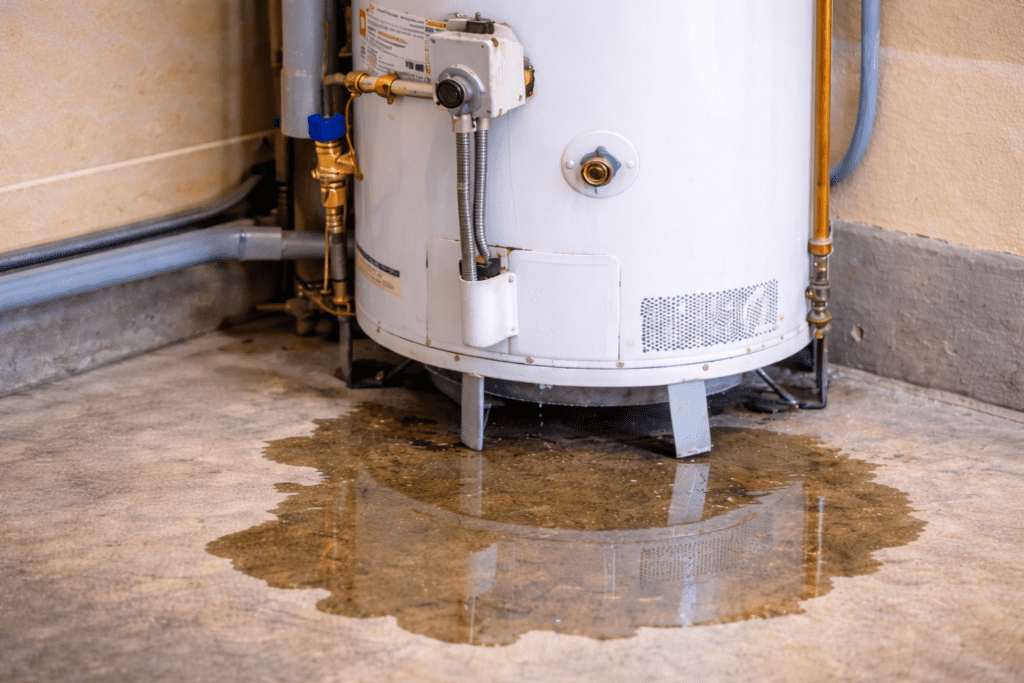
Seeing water around your water heater can be stressful—and for good reason. A leaking water heater can cause property damage fast, and in some cases signals the tank is failing.
Here’s how to identify where it’s leaking, what steps to take immediately, and when it’s time to call a pro.
First: Safety Steps If Your Water Heater Is Leaking
- Turn off power
- Electric: switch off the breaker labeled “water heater”
- Gas: turn the control knob to OFF (or “Pilot” if instructed by the manufacturer)
- Shut off the cold-water supply to the heater (valve on the pipe above the unit)
- Protect the area
- Use towels, a pan, or a wet/dry vac to reduce damage
- If leaking is heavy or spreading, call a plumber right away.
Where Is the Water Heater Leaking From?
1) Water Heater Leaking From the Top
Common causes:
- Loose or corroded inlet/outlet connections
- Failed nipple fittings
- Leaking shutoff valve above the heater
- Condensation (sometimes mistaken for a leak)
What to do:
- Dry the area and watch to see where water reappears
- Tightening fittings may help, but corrosion usually needs part replacement
2) Water Heater Leaking From the Side (Relief Valve / Drain Valve)
Temperature & Pressure Relief Valve (T&P Valve)
This safety valve can drip due to:
- Excess pressure
- Overheating
- A failing valve
Note: A T&P valve that’s discharging frequently should be inspected—this can be a safety issue.
Drain Valve Leak
Plastic drain valves can crack or seep as they age.
Fix: Often a simple valve replacement.
3) Water Heater Leaking From the Bottom
This is the most concerning location.
Possible causes:
- Condensation (especially when first heating)
- A leaking drain valve
- Internal tank failure (rust-through)
How to tell if the tank is failing:
- Persistent leaking from underneath the tank
- Rusty water
- Popping/rumbling noises (sediment buildup)
- Heater is older (many tanks fail as they age)
If the tank itself is leaking, replacement is usually the correct solution.
Common Causes of a Leaking Water Heater
- Loose connections at the top
- Failed T&P valve
- Cracked drain valve
- Sediment buildup causing overheating and damage
- Corrosion inside the tank
- Excess water pressure (whole-house)
When to Call Schrader Plumbing
Call if:
- The leak is coming from the bottom of the tank
- You see rust, corrosion, or heavy moisture
- Your T&P valve is releasing water repeatedly
- You want an expert opinion on repair vs. replacement
Schrader Plumbing
📞 817-262-0989
🌐 SchraderPlumbing.com
FAQ: Water Heater Leaking
Is a leaking water heater an emergency?
It can be. Even a small leak can quickly damage flooring and walls. If the leak is steady, spreading, or from the bottom, treat it as urgent.
Why is my water heater leaking from the bottom?
It may be a drain valve leak, but persistent bottom leaking often indicates internal tank failure.
Can I still use hot water if my water heater is leaking?
Not recommended. Shut off the unit and call Schrader Plumbing, especially if you’re unsure where the leak is coming from.
Categories: Water Heaters,By: Michelle Kurcina
Last modified:
Last Modified: May 11, 2026 at 4:20 pm
