

The Unsung Hero of Your Water Heater: Understanding the T&P Valve
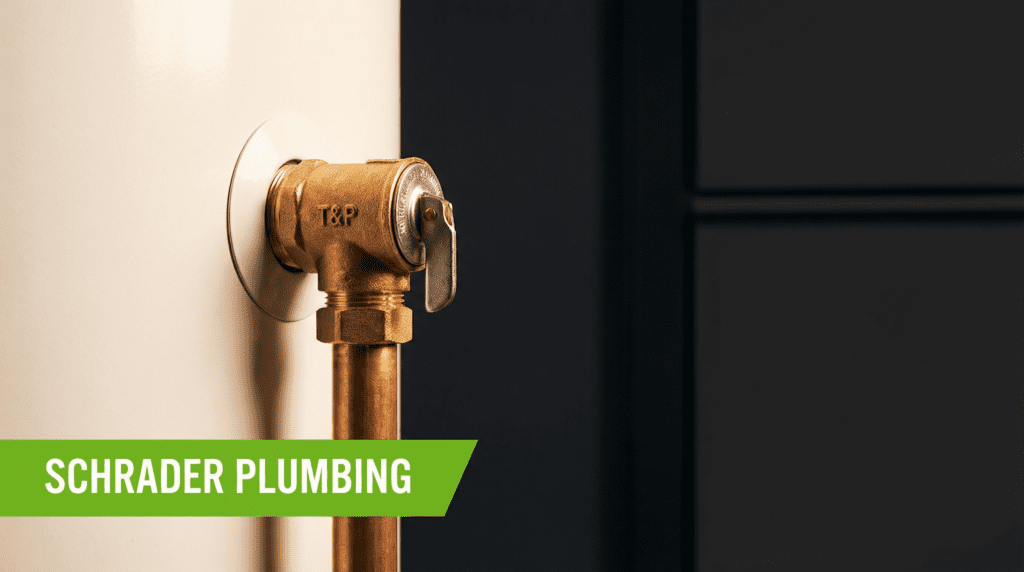
When you think about your home’s plumbing system, the water heater is likely one of the first appliances that comes to mind. It provides the comfort of a hot shower, the convenience of clean dishes, and the luxury of warm laundry. However, hidden in plain sight on the side or top of that vital appliance is a small brass component that plays a massive role in keeping your home safe: the Temperature and Pressure Relief Valve, commonly known as the T&P valve.
At Schrader Plumbing, we believe that informed homeowners make the best decisions for their properties. With over 20 years of experience serving the DFW Metroplex, we have seen firsthand what happens when essential safety devices are overlooked. This guide will explain exactly what a T&P valve does, why it is so critical, and how you can identify if it is malfunctioning before a minor issue turns into a major disaster.
What Exactly Does a T&P Valve Do?
Your water heater is essentially a large tank that continuously heats and stores water. As water heats up, it naturally expands. In a closed plumbing system, this thermal expansion creates significant pressure inside the tank. If the thermostat were to fail and the water continued to heat uncontrollably, the pressure could build to catastrophic levels.
This is where the T&P valve steps in as your ultimate fail-safe. The valve is designed to monitor both the temperature and the pressure inside the water heater tank. If the temperature exceeds 210 degrees Fahrenheit, or if the pressure climbs above 150 pounds per square inch (psi), the valve automatically opens. By releasing a small amount of hot water and steam through the attached discharge pipe, the valve safely relieves the excess pressure, preventing the tank from rupturing or, in extreme cases, exploding.
To put it simply, the T&P valve is the guardian of your water heater. It ensures that the immense thermal energy stored in the tank remains controlled and safe for your household.
Recognizing the Signs of a Malfunctioning T&P Valve
Because the T&P valve is a safety device, it is crucial that it functions perfectly when needed. Unfortunately, like any mechanical component exposed to hard water and constant heat, these valves can degrade over time. Mineral deposits can build up, springs can weaken, and seals can deteriorate. Knowing how to spot a failing valve can save you from severe water damage and costly repairs.
Continuous Dripping or Leaking
One of the most common signs of a malfunctioning T&P valve is a steady drip or a small puddle of water near the base of the water heater, right below the discharge pipe. While it is normal for the valve to release a small amount of water occasionally to relieve pressure, a continuous leak indicates a problem. This could mean that the valve is failing to seat properly due to mineral buildup, or that the pressure in your home’s plumbing system is consistently too high.
Excessive Discharge of Hot Water
If you notice a large volume of hot water frequently rushing out of the discharge pipe, your system requires immediate attention. This indicates that the water heater is repeatedly reaching unsafe temperatures or pressures. The valve is doing its job by opening, but the underlying cause—such as a faulty thermostat or a broken heating element—needs to be diagnosed and repaired by a professional plumber immediately.
A Stuck or Frozen Valve Lever
Every T&P valve has a small metal lever on the outside, which allows for manual testing. When you gently lift the lever, water should flow freely out of the discharge pipe, and when you release it, the flow should stop completely. If the lever is stuck and cannot be lifted, or if lifting it does not release any water, the valve is frozen shut. A frozen valve is incredibly dangerous because it cannot open to relieve pressure during an emergency. Conversely, if you lift the lever and it fails to close properly, resulting in a continuous leak, the valve must be replaced.
Rattling or Whistling Noises
Strange noises coming from your water heater are never a good sign. If you hear a high-pitched whistling or a rattling sound specifically originating from the area of the T&P valve, it may indicate that steam is trying to escape through a partially blocked or failing valve. These sounds suggest that pressure is building up and the valve is struggling to manage it effectively.
When You Need Quality Plumbers, Call Schrader Plumbing!
Your family’s safety and comfort are our top priorities. If you suspect that your water heater’s T&P valve is leaking, stuck, or simply old, do not wait for a complete failure. Attempting to repair or cap a leaking T&P valve yourself is highly dangerous and can lead to severe consequences.
At Schrader Plumbing, we are a local, family-owned and operated business dedicated to providing trustworthy and reliable service. We charge by the job, not by the hour, ensuring upfront pricing with no surprises. Our licensed and insured experts are ready to inspect your water heater, test your safety valves, and provide the professional solutions you need.
With 100% Customer Satisfaction Guaranteed, you can trust us to handle your plumbing problems with the problem-solver mentality you deserve. Contact us today at (817) 262-0989 to schedule your free estimate.
Categories: Water Heaters,By: Michelle Kurcina
Last modified:
Last Modified: April 10, 2026 at 2:22 pm
