

Why Is My Toilet Running? (Top Causes + How to Fix It)
A toilet that keeps running isn’t just annoying—it can quietly waste a lot of water and increase your utility bill. If you’re asking, “why is my toilet running?”, the good news is that the cause is usually inside the tank and often fixable without major repairs.
Below are the most common reasons a running toilet happens, how to diagnose it, and what you can do to stop it.
Quick Signs Your Toilet Is Running Constantly
- You hear water refilling when no one has flushed
- The bowl water ripples randomly
- The tank “hisses” or you hear a steady trickle
- You have to jiggle the handle to stop it
- Your water bill jumped without explanation
1) The Flapper Isn’t Sealing (Most Common Cause)
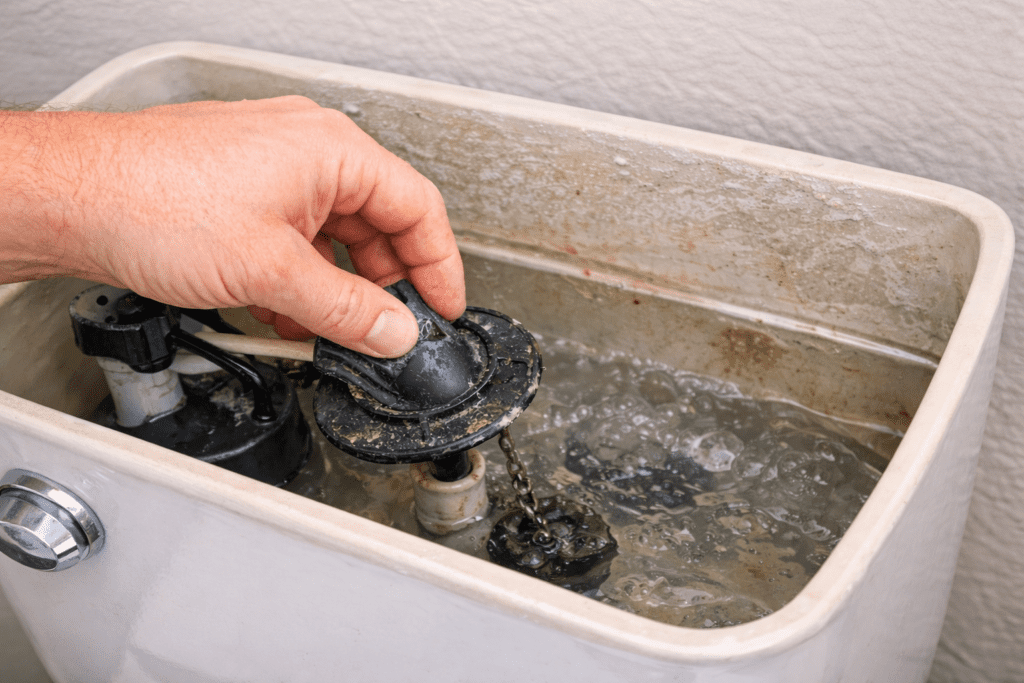
What’s happening: The rubber flapper at the bottom of the tank is supposed to seal tightly after a flush. When it’s worn, warped, or dirty, water leaks into the bowl and the tank keeps refilling.
How to check:
- Remove the tank lid.
- Add a few drops of food coloring to the tank water.
- Wait 10–15 minutes without flushing.
- If color appears in the bowl, the flapper is leaking.
Fix:
- Clean mineral buildup around the flapper seat
- Replace the flapper (low-cost part, common DIY)
Tip: If your toilet is older, replacing the flapper and chain together often helps.
2) The Chain Has Too Much Slack (Or Not Enough)
What’s happening:
- If the chain is too long, it can get stuck under the flapper and prevent sealing.
- If it’s too short, the flapper can’t fully close.
Fix:
- Adjust the chain length so there’s about ½ inch of slack when the flapper is closed.
3) The Float Is Set Too High (Overfilling)
What’s happening: If the float is set too high, the tank water level rises above the overflow tube and spills into it—causing constant refilling.
How to check:
Look for water flowing into the overflow tube even when no one flushed.
Fix:
- For a float cup: turn the adjustment screw to lower the float
- For a float arm: gently bend the arm downward (or adjust the screw if present)
Target: The water level should sit about 1 inch below the top of the overflow tube.
4) The Fill Valve Is Worn Out
What’s happening: The fill valve controls refilling after a flush. If it’s failing, it may run nonstop, leak, or refill very slowly.
Signs:
- Constant hissing
- Intermittent refills
- Slow tank fill or inconsistent shutoff
Fix:
Replacing a fill valve is a standard repair. If you’re comfortable with basic DIY, it’s often straightforward. If not, it’s a quick pro visit.
5) Cracked Overflow Tube or Leaky Tank Hardware (Less Common)
What’s happening:
- A cracked overflow tube can allow water to escape continuously
- Loose bolts or failing gaskets can cause internal leaking that triggers refilling
Fix:
These typically require part replacement and sometimes tank removal—best handled by a plumber if you’re unsure.
When to Call a Plumber for a Running Toilet
Call Schrader Plumbing if:
- You replaced the flapper but it still runs
- The toilet runs intermittently and you can’t identify why
- You see rusted bolts, tank leaks, or cracks
- You want a full rebuild (flapper, fill valve, seals) for reliability
Need help today?
Schrader Plumbing
📞 817-262-0989
🌐 SchraderPlumbing.com
FAQ: Running Toilet
Why does my toilet keep running after I flush?
Usually because the flapper isn’t sealing or the float is set too high, causing water to keep refilling.
Is a running toilet expensive?
It can be—continuous refilling wastes water and can noticeably increase your bill, especially if it runs for days.
What is the fastest fix for a running toilet?
Check the flapper and chain first. Those are the most common and quickest fixes.
Categories: How to's, Toilets,By: Michelle Kurcina
Last modified:
Last Modified: March 6, 2026 at 6:18 pm
