

Spring Plumbing Tips: The Essential Texas Schrader Plumbing Homeowner Checklist
Spring in Texas is a beautiful time, but it’s also a call to action. While we are busy preparing our yards for the heat of summer and planning outdoor BBQs, it’s easy to overlook the systems inside that keep our homes running smoothly. After a winter that might have included hard freezes, your plumbing system needs a dedicated checkup.
At Schrader Plumbing, we believe that preventive maintenance is the best investment you can make in your home. The transition from winter to spring in Texas often brings erratic weather and heavy rains, and ignoring small issues can lead to big problems—like significant water damage, sky-high utility bills, and inefficient appliances.
We have compiled the ultimate guide of Spring Plumbing Tips specifically for Texas homeowners. Following this checklist ensures your systems flow efficiently and reliably all season long.
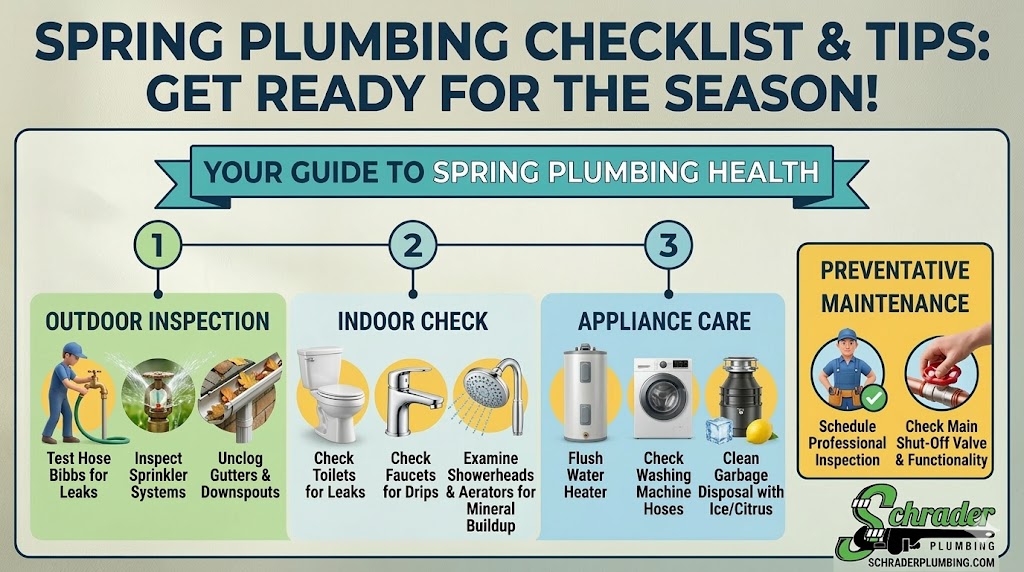
The Schrader Plumbing “Spring Plumbing Tips” Master Checklist
This comprehensive list covers everything from your outdoor spigots to your vital indoor appliances. Let’s get your home ready for a smooth-flowing spring!
I. Outdoor & Perimeter: Securing Your Water Lines
Your home’s exterior takes a beating during the winter, even in Texas. As temperatures fluctuate, the full impact of freezing temperatures becomes apparent. Start your checklist outside.
1. Inspect Outdoor Hose Bibbs for Leaks
One of the most common plumbing issues revealed in the spring is a cracked outdoor hose bib. If you forgot to detach a garden hose during a hard freeze, water can get trapped, expand, and split the hose bib inside your wall. You won’t know there is a problem until you turn the water on.
- The Test: Turn on each outdoor spigot. As the water flows, place your finger over the opening to apply backpressure. If the water stops flowing easily or sprays from an unintended place (like the siding), you may have an internal crack. Call Schrader Plumbing for a professional assessment.
2. Evaluate Your Irrigation and Sprinkler Systems
Your landscaping relies on a healthy sprinkler system, which has been dormant for months. It’s crucial to test it before you need to water daily.
- Action: Conduct a manual “wet test.” Turn on each zone of your system one by one. Check for broken, missing, or clogged sprinkler heads. Watch for zones that are over- or under-watering, and look for signs of underground leaks (such as unexplained wet spots in the lawn). Adjust the spray patterns to ensure you are watering your plants, not the driveway or sidewalk.
3. Clear Your Gutters and Downspouts
This isn’t just a roofing tip; it’s a vital component of foundation and basement water management. Clogged gutters overflow, pooling water directly at your home’s foundation. This water can overwhelm your home’s foundation drain lines.
- Action: Safely remove all debris—leaves, twigs, and sediment—from your gutters and downspouts. Ensure the downspouts are properly extended to divert water at least three feet away from your foundation wall. Consider adding gutter guards to minimize future cleaning needs.
II. Indoor Diagnostics: The Bathroom and Kitchen Check
The core of your daily water usage happens indoors. A slight malfunction here can dramatically increase your utility bills.
4. Perform a Visual Leak Audit on All Faucets
A single faucet dripping at the rate of one drip per second can waste over 3,000 gallons of water a year. That’s enough water for almost 180 showers!
- Action: Go from room to room—bathrooms, kitchen, laundry room—and check every faucet, showerhead, and aerator. Look for active drips, but also check for subtle dampness inside the vanity cabinets (under the sink) or on the supply lines. Many leaks hide until they have already damaged the cabinetry. Replacing an aerator or a cartridge is a quick, inexpensive fix.
5. Conduct the Silent Toilet Leak Test
Toilets are the largest water consumers in the home, accounting for nearly 30% of average indoor water use. A silent leak can go unnoticed for months, inflating your water bill.
- The Test: This is one of the easiest Spring Plumbing Tips. Open the back of your toilet tank. Put about 10–15 drops of food coloring into the water. (Do not flush.) Wait 15–20 minutes. If color appears in the toilet bowl without flushing, your flapper valve is leaking and needs to be replaced. This is a very common and inexpensive repair.
6. Inspect and Maintain Your Garbage Disposal
Your garbage disposal works hard and often gets neglected. It’s important to clean and inspect it to avoid costly jams and backups, especially before spring entertaining.
- The Fix: Avoid grinding stringy materials (like celery), fats, grease, or large amounts of pasta. To clean and freshen the unit, grind a cup of ice cubes mixed with a few lemon or orange peels. The ice sharpens the blades, and the citrus natural acid removes buildup and odors. Always run plenty of cold water during and after use.
III. Appliance and Utility Check: Powering Your Home Efficiently
The major appliances that handle water and heat need annual maintenance to operate safely and effectively.
7. Examine Washing Machine and Dishwasher Hoses
This is a critical maintenance step that is frequently overlooked. A burst washing machine hose can lead to catastrophic water damage, pouring hundreds of gallons of water into your home in minutes.
- Action: Pull your washing machine and dishwasher away from the wall. Check the hot and cold water supply hoses for signs of wear and tear, including cracks, bulging, blisters, or leaks near the connection points. Crucial: If you have standard rubber hoses, Schrader Plumbing recommends replacing them immediately with stronger, burst-resistant, stainless steel braided hoses.
8. Schedule a Water Heater Inspection
Your water heater is a major component of your home’s comfort and energy budget. Sediment—mineral deposits like calcium and lime—naturally accumulates at the bottom of the tank over time. This sediment acts as a barrier between the heating element and the water, forcing the system to work harder, decreasing efficiency and shortening the unit’s lifespan.
- Action: Contact Schrader Plumbing to schedule a professional water heater inspection. We can safely flush the sediment if the unit is not too old and in safe working condition, check the anode rod (which prevents the tank from rusting inside out), and inspect the Temperature & Pressure (T&P) Relief Valve for proper operation.
The Final Step: Consider a Professional Spring Plumbing Inspection
While this DIY checklist is an excellent foundation for home maintenance, it cannot replace the trained eye of a professional plumber. A certified Schrader Plumbing technician has the tools and expertise to conduct a more invasive check.
A professional spring inspection includes:
- Checking Water Pressure: High water pressure is a leading cause of leaks, pipe damage, and appliance failure. We will verify your water pressure and ensure your Pressure Reducing Valve (PRV) is working correctly.
- Inspecting Visible Pipe Systems: We look for corroded joints, unusual pipe movement, or subtle water staining that signals trouble beneath the surface.
- Camera Inspections: If needed, we can use sewer camera technology to look inside your main sewer line and ensure no winter damage, blockages, or tree root intrusions have occurred.
Make Spring the Season of Efficiency and Safety
By investing a small amount of time in these Spring Plumbing Tips, you protect your home, save money on water and energy bills, and avoid the stress and expense of major emergency repairs. Your home’s plumbing is complex, but with Schrader Plumbing as your partner, keeping it healthy is simple.
Categories: Faucets, Hose Bibb, How to's, Toilets, Water Heaters,By: Michelle Kurcina
Last modified:
Last Modified: March 19, 2026 at 2:21 pm
